+86-532-67722787 info@simenmetal.com



 Wrought Iron Components Rosettes
 Decorative Iron Work Scroll
 Forged Elements
 Wrought Iron Balusters
 Railing Parts Baskets
 Handrails
 Rings
 Cast Spear Point
 Studs
 Spheres
 Bases
 Stamping Leaves
 Cast Steel Leaves
 Cast Iron Components
 Gate Accessories
 Caps
 Handles
 Lock Plate
 Grinding Wheel
 Labour Protection Appliance
 Welding Series
 Postal Boxes

Wrought iron rosettes are circular or flower-inspired decorative components used to create focal points in gates, fences, railings and ornamental panels. They can soften straight bars, mark the center of a symmetrical layout and connect different scroll or floral elements into a coordinated design.
Choosing a rosette involves more than selecting an attractive motif. Its size, base profile, placement and relationship to surrounding components affect the balance of the finished panel. This guide explains how to select and position wrought iron rosettes for gates, fences and railings.
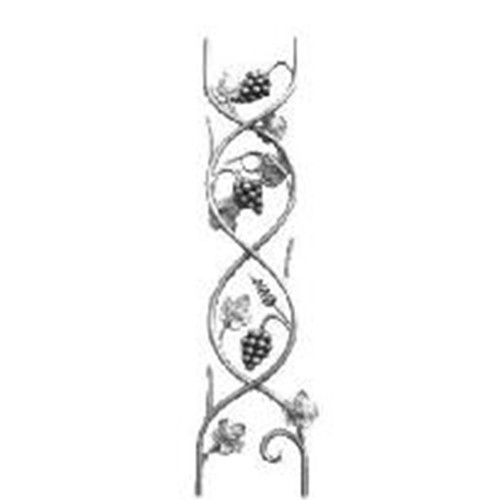
A rosette can serve as a central ornament, a repeated accent or a transition between structural bars and decorative details. In a gate panel, it may highlight the center of the design; in a railing, it can break up vertical repetition; in a fence section, it can create a consistent pattern across multiple panels.
The right role depends on panel size, surrounding components and the desired design style.
Measure the clear area between the frame, rails or bars before selecting a rosette. A rosette should fit comfortably within the panel and leave enough open space for the design to remain readable.
Do not choose a rosette based only on its product image. Review it within the full panel drawing, including frame members, bar spacing and adjacent ornaments.
Many rosettes are designed to fit around or connect with a bar. The base profile should be checked against the actual bar section used in the assembly.
For example, the Rosettes category includes products with base references such as 12*6, 口12, 16*8 and φ14mm. These values should be confirmed against the actual project drawing rather than assumed to be interchangeable.
A single central rosette works well in symmetrical gate panels and feature railing sections. It can be surrounded by matching scrolls, curved bars or symmetrical pickets to create a clear focal point.
Paired rosettes can be placed symmetrically on either side of a central element. This arrangement works well for double gates or wider panels where one central motif would leave too much open space.
Repeated rosettes can create rhythm across a long fence or railing. This approach is useful when the same panel design is repeated along a boundary or balustrade.
Rosettes rarely work best as isolated ornaments. Their effect depends on how they interact with surrounding components.
Scrolls can lead the eye toward a central rosette or extend outward from it. When combining these components, check the direction of the scroll curves and the space they occupy.
In railing layouts, rosettes can be combined with pickets to add visual interest at selected positions. The picket height, bar profile and ornament width should be reviewed together.
Some rosettes are designed to work around a bar. In this case, the base profile and bar dimensions must match before the component can be specified.
This is an illustrative layout scenario, not a documented customer installation. A fabricator is preparing a symmetrical gate panel and wants a clear central ornament without overcrowding the surrounding bars.
The buyer needs a central rosette that fits the available panel space and works with the selected bar profile. The surrounding scrolls and bars must remain visually balanced.
Start with the panel dimensions and bar layout. Select a rosette proportionate to the available space, then add matching scrolls or bars around it. Confirm the base profile and attachment arrangement before finalizing the drawing.
The goal is a balanced gate panel with a clear central ornament and consistent spacing across the remaining components. This approach provides a practical basis for selecting rosettes without assuming that any motif will fit any panel.
They are decorative components used in gates, fences, railings and ornamental panels. They can act as central ornaments, repeated accents or transition details.
Start with the available panel space and surrounding bar layout. Review the rosette within the full panel drawing rather than selecting it from an isolated product image.
Yes. Rosettes are often combined with scrolls, pickets and bars. Confirm the dimensions, base profile and intended arrangement before fabrication.
No. Base profiles vary between models. Confirm the rosette drawing and the actual bar section before specifying the component.
A single rosette is often placed at the center of a symmetrical panel. Paired or repeated rosettes may be used in wider panels or long fence and railing sections.
Confirm the model, dimensions, base profile, material, finish, quantity and packing requirements. For custom designs, provide a drawing showing the intended panel layout.
