+86-532-67722787 info@simenmetal.com


 Wrought Iron Components Rosettes
 Decorative Iron Work Scroll
 Forged Elements
 Wrought Iron Balusters
 Railing Parts Baskets
 Handrails
 Rings
Rings
 Cast Spear Point
 Studs
Studs
 Spheres
 Bases
Bases
 Stamping Leaves
 Cast Steel Leaves
 Cast Iron Components
 Gate Accessories
 Caps
Caps
 Handles
 Lock Plate
 Grinding Wheel
 Labour Protection Appliance
 Welding Series
 Postal Boxes

Wrought iron scrolls are among the most recognizable components used in decorative iron work for gates, fences, balcony railings and stair railings. Their curves can soften straight structural bars, create visual rhythm across a panel and support design styles ranging from traditional European patterns to cleaner modern layouts.
However, choosing a scroll is not only a matter of appearance. The shape, orientation, size and placement of each element affect fabrication efficiency, panel balance, welding access and the final character of the project. This guide explains the most common wrought iron scroll types and how to select them for different architectural metalwork applications.
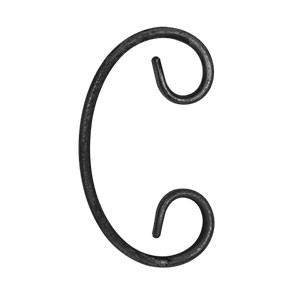
A scroll can act as a central focal point, a repeated border detail or a connecting element between vertical and horizontal bars. The same scroll shape may look formal and symmetrical in a double gate, but more relaxed and decorative when used along a stair railing.
Before selecting a design, fabricators and project planners should consider the overall opening size, the structural frame, the desired visual density, the installation location and the style of nearby architectural elements. A scroll that is too small can disappear within a large panel, while an oversized pattern may make a railing or gate appear crowded.
C-scrolls curve inward from one end and resemble the letter “C.” They are widely used in traditional gate panels, garden fences, balcony railings and ornamental borders. Their open shape makes them flexible for many layouts: a single C-scroll can fill a corner, while mirrored C-scrolls can create a balanced central motif.
C-scrolls work well when a design needs a classic appearance without too much visual complexity. They can be arranged facing inward, outward, upward or downward, depending on whether the goal is to frame a panel, guide the eye toward the center or create a repeated decorative rhythm.
S-scrolls combine two opposing curves and resemble the letter “S.” Because they create movement in two directions, they are often used in railing panels, gate infill sections and decorative transitions between vertical bars. They can make a simple linear structure look more dynamic while maintaining an orderly layout.
For symmetrical projects, S-scrolls can be repeated in alternating directions or paired with mirrored components. In more contemporary patterns, a limited number of larger S-scrolls may be used as focal details instead of filling every open space.
Spiral and volute scrolls feature a tighter inward coil. They are commonly used where a more detailed or formal decorative effect is required, such as entrance gates, premium balcony railings, restoration-style projects and feature panels. Their compact form makes them useful at corners, ends and connection points.
Because spiral elements draw attention, they should be used with care. A panel containing many large spirals can become visually heavy, especially when the structural bars are already closely spaced. In most cases, a few well-positioned spiral details create a stronger result than a dense collection of unrelated curves.
Double scrolls combine two matching curves into one decorative unit. Mirrored scrolls use left- and right-facing elements to create symmetry around a central vertical bar, rosette or spearhead. These arrangements are particularly effective for double-leaf gates, formal entrances and evenly divided fence panels.
When using mirrored designs, confirm that the scroll direction matches the final drawing. A left-facing and right-facing pair may look similar in a product image, but the orientation changes the visual flow of the completed panel.
| Scroll Type | Visual Character | Common Applications | Best Use in a Layout | Selection Consideration |
|---|---|---|---|---|
| C-Scroll | Classic, open and balanced | Gates, fences, balcony railings, borders | Corners, repeated patterns and central pairs | Choose direction carefully for symmetry and visual flow |
| S-Scroll | Flowing, dynamic and connected | Railing panels, gate infill and decorative transitions | Between vertical bars or across wider panel sections | Avoid excessive repetition in narrow spaces |
| Spiral / Volute | Detailed, formal and eye-catching | Entrance gates, feature panels and restoration-style work | Focal points, corners and end details | Use selectively to prevent visual overcrowding |
| Double / Mirrored Scroll | Formal, symmetrical and structured | Double gates, central panels and fence sections | Centred layouts and repeated architectural modules | Confirm left/right orientation before fabrication |
Entrance gates often benefit from a clear central composition. Double scrolls, mirrored C-scrolls and spiral motifs can create a focal point around a central rosette, decorative panel or lock area. For wide double gates, use the vertical centerline as the main reference for matching the left and right sides.
Security requirements should remain part of the design process. Scrolls can add detail to a gate, but they should not weaken the structural frame or create climbing points where security is a priority. In high-traffic or exposed locations, the main frame, bar spacing and connection details should be determined before decorative elements are added.
Fence panels often use decorative iron work in repeatable patterns across multiple sections, helping maintain a consistent appearance along long boundary lines.
For a cleaner appearance, use one primary scroll shape and repeat it at consistent intervals. Combining too many unrelated shapes in a standard fence panel can reduce visual clarity and make fabrication more complicated.
For stair and balcony railings, the decorative pattern should work with the direction of the handrail and the overall geometry of the opening. On sloped stair sections, scrolls may need to be positioned so that their curves follow the visual movement of the stair line rather than appearing tilted or disconnected.
Scrolls can be combined with wrought iron balusters to create railing panels with both structural rhythm and decorative detail. When planning the layout, keep sufficient open space so that the railing remains visually light and does not appear overly dense.
Scroll selection should begin with the dimensions of the finished panel rather than the scroll image alone. Measure the available opening height and width, identify the frame and bar spacing, then choose a scroll size that fits comfortably within the remaining space. A decorative element should support the panel proportion instead of competing with the structural components.
The bar profile also affects the final appearance. Flat bar, square bar and round bar can produce different visual effects even when the scroll shape is similar. Matching the scroll profile with the surrounding bars creates a more consistent design and can simplify welding and finishing.
Orientation is equally important. Consider whether the curve should open toward the center of the panel, toward the border, upward along a stair line or downward to create a grounding effect. For symmetrical work, confirm the required left-hand and right-hand versions before production begins.
For projects that require scroll-based patterns, explore decorative iron work scroll components suitable for gate, fence and railing fabrication.
Combining C-scrolls, S-scrolls, spirals, leaves, baskets and other motifs in one small panel can make the layout look unplanned. Choose a primary shape, then add secondary details only where they support the overall pattern.
A scroll that looks attractive as an individual component may not suit a narrow railing panel or a very large gate. Always review components within the full drawing, including frame members, vertical bars, hinges, locks and adjacent panels.
Mirrored layouts require correctly matched parts. Ordering or installing the same orientation on both sides can make a formal gate design appear unbalanced. Mark orientation clearly on the drawing and component list.
Decorative parts should complement a sound structural design. Establish frame dimensions, load paths, required bar spacing and connection points first. This is especially important for gates, exterior railings and any assembly that must meet local safety or building requirements.
A C-scroll uses one main curve and is often used for corners, borders and symmetrical pairs. An S-scroll combines two opposing curves, creating a more flowing shape that works well in railing panels and gate infill designs.
Mirrored C-scrolls, double scrolls and selected spiral motifs are common choices for double gates because they can create a balanced design around the centerline. The best option depends on the gate width, frame structure and preferred design style.
Yes. Modern designs generally use fewer scrolls, cleaner lines and more open space. Larger simple curves or limited geometric-inspired scroll arrangements can add detail without creating an overly traditional appearance.
Start with the finished panel dimensions, frame thickness and bar spacing. Review the selected scroll in the complete layout, not only as an individual product image. The scroll should fit the available space while leaving enough room for welding, finishing and visual balance.
The gate or railing frame should be planned first because it determines the available panel space, structural connections and safety requirements. Decorative scrolls can then be selected to suit the confirmed layout.
Scrolls are suitable for many decorative iron work projects, including gates, fences and railings, but the right shape and scale depend on the panel size, structural layout, design style and installation environment.
