+86-532-67722787 info@simenmetal.com


 Wrought Iron Components Rosettes
 Decorative Iron Work Scroll
 Forged Elements
 Wrought Iron Balusters
 Railing Parts Baskets
 Handrails
 Rings
 Cast Spear Point
 Studs
 Spheres
 Bases
 Stamping Leaves
 Cast Steel Leaves
 Cast Iron Components
 Gate Accessories
 Caps
 Handles
 Lock Plate
 Grinding Wheel
 Labour Protection Appliance
 Welding Series
 Postal Boxes

When comparing forged vs cast vs stamped iron components for a gate, fence or railing, start with what the part needs to do. A scroll made from solid bar, a cast rosette with deep relief and a stamped leaf can all suit the same panel, but they solve different design problems. Shortlist forged parts when the design calls for a solid, shaped profile, cast parts when the motif needs depth and detail, and stamped parts when the design can be formed from sheet and repeated across multiple panels. Then confirm the actual material, attachment method and finished dimensions before ordering.
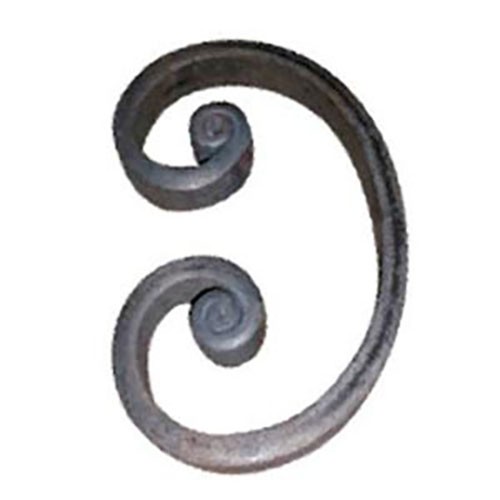
Forging, casting and stamping describe how a part is made. They do not, by themselves, tell you what the part is made of or how it will perform. Traditional wrought iron is a specific material; modern forged ornaments may be made from steel, and a casting may be made from cast iron or cast steel. A catalog label such as “wrought iron ornament” is useful for finding a style, but it is not a material specification. For the material distinction, see wrought iron vs cast iron.
This distinction matters when an ornament must be welded to a frame, will be exposed to knocks or needs to fit an existing assembly. It also matters when comparing price: a lower piece price may not mean a lower installed cost if the part needs extra fitting, a separate bracket or more finishing. For a load-bearing or safety-related part, use the assembly’s design requirements and verified material and connection data rather than this decorative comparison.
Forging shapes solid metal under compressive force, typically with a hammer or press. It may be performed hot, warm or cold, depending on the process. For ornamental work, the practical distinction is that shaping solid stock can produce tapered ends, fuller transitions or a substantial profile that reads clearly from the side. A forged part’s impact behavior and weldability still depend on the actual grade, section and condition.
Consider forged components for solid-profile finials, shaped picket details and scrolls where the bar section is part of the design. When comparing forged iron elements, look beyond the front view. A side view or drawing can show whether the transition, base and attachment face suit the adjoining bar. For a custom profile, find out whether existing tooling can be used or whether the shape requires a new die.
Casting forms a part by filling a mold cavity with molten metal and allowing it to solidify. It is worth considering when a motif needs rounded contours, recessed areas or raised detailing at several depths. The design still has to suit the molding process. Ask the supplier where the mold halves meet, what details may need cleanup, and whether the visible face can be made as drawn.
Shortlist cast iron components for relief rosettes, medallions or decorative inserts where depth is part of the design. Do not assume the grade from the appearance. Gray cast iron is generally less tolerant of impact than ductile iron, and welding cast iron is not equivalent to welding a mild-steel ornament. If the design calls for welding, identify the grade and have the fabricator review the joint. If welding is unsuitable, assess whether a properly designed mechanical fixing is an option.
Stamping uses a press and dies to cut or form sheet metal. Blanking cuts out the part’s outline, while embossing presses raised or recessed details into the sheet. A stamped ornament is not necessarily flat: it can have curved surfaces, raised veins or formed edges. Its geometry still starts with sheet stock, so the reverse side, edge and attachment area may look or behave differently from those of a solid ornament.
Consider stamped metal ornaments for leaves, shallow floral accents and repeated details where a solid section or deep relief is unnecessary. Existing tooling can make a catalog design practical even for a smaller order. For a new motif, compare the tooling cost against expected order quantities. Check the edge finish, formed depth and attachment area on a sample, especially if both faces of the panel will be visible.
Use this table to shortlist a process, not to assign a strength rating or approve a finished assembly.
| Selection factor | Forged | Cast | Stamped |
|---|---|---|---|
| Forming method | Solid stock is shaped under compressive force. | Molten metal solidifies in a mold cavity. | Press tooling cuts or forms sheet stock. |
| Design detail | Solid contours, tapers and shaped transitions. | Three-dimensional contours and deeper relief. | Defined outlines, shallow relief and formed sheet profiles. |
| Impact behavior | Depends on grade, section and condition; verify when impact matters. | Grade is critical. Gray iron is generally less impact-tolerant than ductile iron. | Thin sections may dent or bend; check thickness, forming and support. |
| Weldability | Confirm the grade and joint; forged does not automatically mean weldable. | Confirm the grade and procedure; cast iron may require special precautions or a different fixing method. | Confirm the sheet grade and joint; thin sections can be sensitive to distortion or burn-through. |
| Suitable order volume | Catalog parts can suit small orders; custom dies need a separate cost review. | Depends on pattern cost, molding method and order quantity. | Well suited to repeat orders when tooling exists or the required volume justifies it. |
| Typical ornaments | Solid-profile finials, shaped picket details and scrolls. | Relief rosettes, medallions and decorative inserts. | Leaves, shallow floral accents and repeated sheet details. |
| Key selection limit | Check whether the profile, base and tolerances can be produced with available tooling. | Check mold design, section transitions, attachment and visible cleanup. | Check sheet thickness, formed depth, edge finish and reverse-side appearance. |
Start with existing catalog shapes before commissioning tooling. For a small gate job, an existing bar scroll that already fits the frame may be more practical than a custom casting or stamping. If none fits, identify what actually needs to change: the visible outline, the stock section or just the attachment point. Compare quotes on the same basis, separating tooling, unit price, secondary work and finishing.
For multiple panels, decide which dimensions need to repeat: overall width, mounting position, visible height or clearance from adjacent bars. Stamping is a candidate when the feature can be formed from sheet. A repeated solid-bar scroll still calls for a solid-section option if its edge profile is important. Approve a sample in a representative panel layout, where small fit or alignment differences are easier to see than on a loose part.
Choose based on where the detail comes from. If the motif depends on deep relief or a sculpted face, evaluate casting. If the effect comes from a shallow vein or raised outline, compare embossing. If the ornament’s depth comes from a solid bar profile, evaluate forged options. For an open panel, review both faces and the side view before approving the design.
This is an example of the selection process, not a documented customer project. A fabricator needs a double gate and matching fence sections with repeated scrolls and leaf accents. The drawings call for the scrolls to retain a visible bar profile from both sides, while the leaves only need a shallow raised vein.
The fabricator can shortlist solid-profile ornamental iron scroll components for the main pattern and stamped leaves for the lighter accent. If the gate also needs a central medallion with deeper relief, a cast ornament can be assessed separately, including how it will attach. Before approving the order, the buyer checks a representative panel section for mirrored orientation, scroll clearance, attachment access and the appearance of both faces. The components do not need to share one manufacturing method; they need to work together in the same panel.
No. Compare the specified materials, dimensions, load direction and attachment details. A process name alone does not establish the strength of a part or its suitability for a gate or railing.
Some cast iron grades can be welded, but the grade and joint must be evaluated first. Do not apply a standard steel welding procedure to an unidentified casting. If welding is not suitable, have the fabricator assess a mechanical attachment.
No. A standard stamped part made with existing tooling may suit a small order. For a custom design, compare tooling and sample charges, unit prices and expected repeat quantities before choosing the process.
