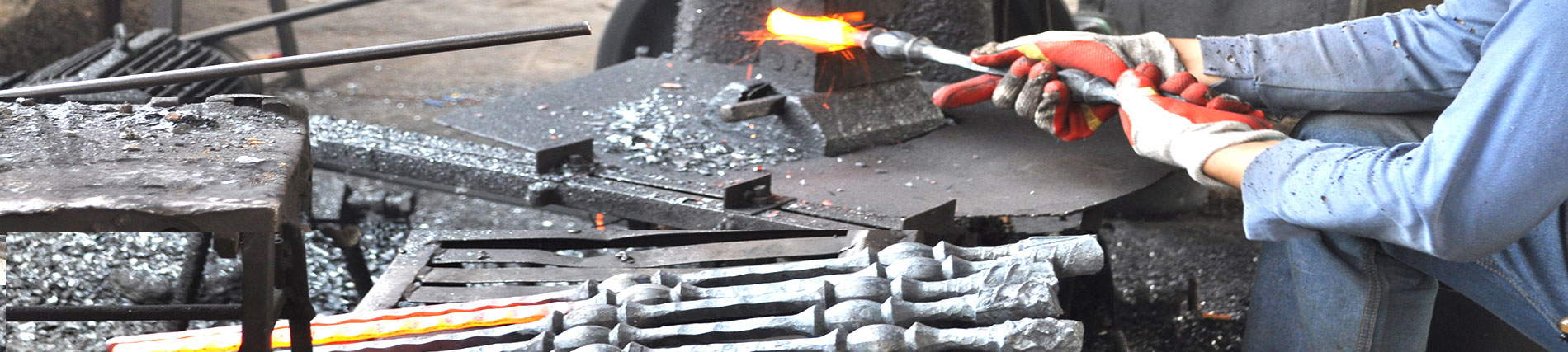
Forged elements represent the pinnacle of metal forming technology, where compressive forces at elevated temperatures create components with directional grain flow and superior mechanical properties. Procurement professionals frequently ask what makes forged elements preferable to castings or fabrications - the answer lies in their unmatched combination of strength, toughness, and dimensional stability under extreme service conditions.
Essential characteristics of forged elements:
- Continuous metal flow lines without internal defects
- Higher fatigue strength than cast or welded alternatives
- Custom alloy formulations for specific environmental demands
- Scalable from prototype development to high-volume production
- Precision machining allowances optimized for final tolerances
Key Features
Buyers evaluating forged elements want concrete advantages over competing manufacturing methods. These engineered features directly address common concerns about load capacity, corrosion resistance, and long-term reliability.
Technical advantages:
- 20-50% higher tensile strength through grain alignment
- Excellent impact resistance at elevated and cryogenic temperatures
- Dimensional accuracy ±0.5mm from die design
- Heat treatment capabilities to 45 HRC surface hardness
- Broad material compatibility including alloy steels, stainless, and tool steels
Applications
The versatility of forged elements spans mission-critical applications where failure is not an option. Customers consistently inquire about proven uses - these components excel in structural, mechanical, and high-stress environments across multiple sectors.
Primary applications:
- Construction: Structural flanges, pipe fittings, bridge components
- Automotive: Crankshafts, connecting rods, transmission gears
- Oil & Gas: Valve bodies, wellhead connectors, manifold blocks
- Heavy Machinery: Axle shafts, sprockets, pivot pins
- Power Generation: Turbine discs, generator shafts, pressure fittings
Technical Specifications
Technical buyers demand precise specifications when sourcing forged elements. These parameters answer fundamental questions about sizing capabilities, material grades, testing protocols, and performance guarantees.
Standard capabilities:
- Maximum diameter: 1000mm
- Maximum weight: 10 metric tons per forging
- Common alloys: AISI 1045, 4140, 4340, 17-4PH stainless
- Surface finish: Ra 3.2-6.3µm as-forged
- Non-destructive testing: 100% ultrasonic, magnetic particle
- Heat treatment: Normalized, quenched & tempered, stress relieved
Operation & Maintenance
Forged elements provide decades of reliable service when properly maintained. Customers frequently ask about inspection frequency and failure indicators—these protocols maximize component life in demanding applications.
Maintenance essentials:
- Quarterly visual inspection for surface fatigue cracks
- Annual ultrasonic testing for critical load-bearing parts
- Torque verification on all bolted connections
- Lubrication according to OEM schedules
- Dry, covered storage to prevent corrosion
Customer Benefits
The true value of forged elements emerges over their lifecycle. Buyers quickly realize that superior initial performance translates to dramatically lower total ownership costs compared to alternative manufacturing methods.
Lifecycle advantages:
- 3-5x service life versus cast equivalents
- 40% weight savings over welded fabrications
- 25% reduced machining stock requirements
- Elimination of casting porosity failures
- Predictable fatigue performance under cyclic loading
Comparison Table: Forged vs. Alternative Methods
When procurement teams ask "Why specify forged elements over castings or machining?" this engineering comparison clarifies the performance advantages justifying investment in premium components.
Characteristic Forged Elements Cast Elements Machined Bar Stock
Tensile Strength Highest Moderate High
Fatigue Resistance Excellent Fair Good
Impact Toughness Superior Variable Good
Dimensional Accuracy ±0.5mm ±1.5mm ±0.1mm
Material Utilization 90%+ 60-70% 30-50%
Production Speed High volume High volume Low volume
Cost per Unit Strength Lowest Higher Highest
Case Study: Infrastructure Success
A major infrastructure contractor replaced problematic cast steel fittings with forged elements in high-stress highway bridge expansion joints, resolving chronic fatigue failures that threatened public safety.
Implementation results:
- Complete elimination of cracking after 7 years service
- 42% reduction in scheduled maintenance costs
- Enhanced corrosion resistance in de-icing salt environment
- Precision fit-up reduced installation time 28%
- Full compliance with AASHTO bridge specifications
Engineering Manager Testimonial
"Our forged elements specification eliminated the single biggest maintenance liability in our bridge portfolio. The initial investment returned full value within two inspection cycles through zero failures and dramatically reduced lane closure requirements."
Certifications
International quality certifications validate forged elements performance guarantees. Buyers require documented compliance with recognized standards for regulated applications.
Current accreditations:
- ISO 9001:2015 Quality Management System
- ISO 14001:2015 Environmental Management
- ASME Section II Material Specifications
- EN 10204 Type 3.1 Material Test Reports
- ASNT Level II NDT Personnel Certification
After-Sales Service
True partnership extends beyond delivery. Customers receive comprehensive technical support ensuring optimal forged elements integration and maximum return on investment.
Support services:
- Material selection engineering consultation
- Custom secondary machining recommendations
- Comprehensive failure analysis capabilities
- Expedited replacement for mission-critical spares
- On-site application engineering assistance
FAQ
1. What is the lead time for custom forged elements?
Custom forgings typically ship 6-12 weeks from order confirmation, depending on complexity, alloy availability, and heat treatment requirements.
2. Can forged elements replace existing castings in my design?
Most cast-to-forged conversions achieve 30-50% strength improvement with minimal design changes. Engineering analysis confirms fit and performance.
3. What testing is standard for safety-critical applications?
100% ultrasonic testing plus tensile, Charpy impact, and hardness verification meets ASME and API requirements for pressure boundaries.
4. Are forged elements more expensive than castings?
Initial cost is higher, but lifecycle analysis shows 3-5x longer service life and 40% lower total ownership cost for high-stress applications.
5. What is your minimum order quantity for forged elements?
Prototype quantities start at 10 pieces; production runs from 100 pieces with volume discounts available.
Partner with China's Premier Forged Elements Manufacturer
Qingdao Simen Metal Co., Ltd. delivers engineering-grade forged elements combining traditional forging mastery with modern precision manufacturing capabilities. From critical infrastructure components to high-performance automotive parts, their comprehensive alloy expertise and rigorous quality controls make them the preferred partner for customers demanding absolute reliability.
Authoritative Sources
Ohio State University Center for Forging & Manufacturing: Forging design handbook (
https://cfm.osu.edu)
NIST Manufacturing Extension Partnership: Metal forming optimization (
https://www.nist.gov/mep)
ASM International Metals Handbook: Forged component engineering data (
https://www.asminternational.org)
Journal of Materials Processing Technology: Advanced forging research (
https://www.sciencedirect.com/journal/journal-of-materials-processing-technology)


 Wrought Iron Components Rosettes
 Decorative Iron Work Scroll
 Forged Elements
 Wrought Iron Balusters
 Railing Parts Baskets
 Handrails
 Rings
Rings
 Cast Spear Point
 Studs
Studs
 Spheres
 Bases
Bases
 Stamping Leaves
 Cast Steel Leaves
 Cast Iron Components
 Gate Accessories
 Caps
Caps
 Handles
 Lock Plate
 Grinding Wheel
 Labour Protection Appliance
 Welding Series
 Postal Boxes