+86-532-67722787 info@simenmetal.com


 Wrought Iron Components Rosettes
 Decorative Iron Work Scroll
 Forged Elements
 Wrought Iron Balusters
 Railing Parts Baskets
 Handrails
 Rings
Rings
 Cast Spear Point
 Studs
Studs
 Spheres
 Bases
Bases
 Stamping Leaves
 Cast Steel Leaves
 Cast Iron Components
 Gate Accessories
 Caps
Caps
 Handles
 Lock Plate
 Grinding Wheel
 Labour Protection Appliance
 Welding Series
 Postal Boxes
Wrought iron components are prefabricated decorative and structural pieces used to build gates, railings, fences, balconies, furniture, and other architectural metalwork. They are valued for strength, malleability, and a timeless aesthetic that fits both classical and modern designs.
For buyers, these components help reduce fabrication time, standardize quality, and enable highly customized patterns without reinventing the design from scratch on every project.
 Why Customers Choose Wrought Iron Components
Customers asking about wrought iron components usually focus on durability, maintenance, safety, cost, and design flexibility. The material properties of wrought iron largely explain its popularity:
High strength and toughness: Wrought iron is tough, malleable, and fatigue resistant, with typical yield strength around 220 N/mm², similar to mild steel.
Good corrosion resistance: Its low carbon content and slag inclusions help form a protective oxide layer, making it more resistant to rust than many steels in non-extreme environments.
Excellent workability: Wrought iron can be bent, twisted, and forged into intricate scrolls, rosettes, and panels without cracking, which is essential for decorative components.
Gradual, predictable deterioration: When exposed outdoors, it deteriorates slowly and predictably, so routine maintenance can preserve it for decades.
Because of these characteristics, properly designed wrought iron components offer long service life, strong security, and high-end visual impact for residential, commercial, and public projects.
With appropriate design and maintenance, wrought iron components can easily last several decades, even outdoors. Their corrosion resistance is better than that of many common steels thanks to slag inclusions and protective oxide formation.
When protected with modern coatings such as hot-dip galvanizing plus powder coating, service life can be significantly extended in urban and coastal environments.
Any ferrous metal can corrode, but wrought iron corrodes more slowly and predictably than many steels. To minimize rust, reputable wrought iron components manufacturers use:
Hot-dip galvanizing for a zinc barrier layer.
Powder coating or high-performance paint systems to seal the surface from moisture and pollutants.
Proper surface preparation (cleaning, blasting, conversion coatings) to ensure coating adhesion.
Following established conservation guidance for architectural metals (e.g., regular cleaning, inspection, and prompt touch-up of damaged coatings) further slows atmospheric corrosion.
Yes, when properly designed and installed, wrought iron is more than strong enough for safety railings, balcony guards, and security gates. Its combination of tensile and compressive strength, plus toughness and fatigue resistance, makes it suitable for load-bearing and protective applications.
Building codes still need to be followed for bar spacing, rail height, and anchoring; responsible manufacturers and fabricators will design components to satisfy applicable standards.
Typical prefabricated wrought iron components include:
Bars and pickets (square, round, twisted) for infill and frames
Balusters for staircases and balconies
Scrolls and S‑curves for decorative infill
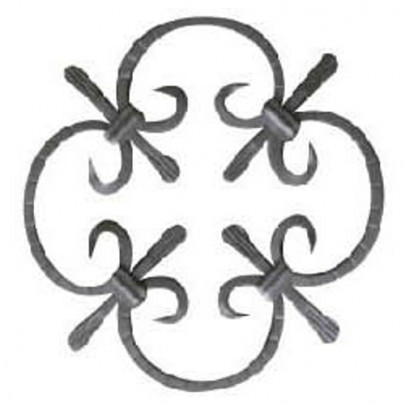
Rosettes and medallions as focal ornaments
Decorative collars, baskets, and balls as accents
Panels and grille inserts with integrated patterns
These component families can be combined in countless ways to create custom gates, fences, railings, balcony fronts, window grills, canopy frames, furniture bases, and more.
Architects and designers commonly use wrought iron components in:
Exterior: driveway gates, pedestrian gates, perimeter fences, balcony railings, staircase railings, window guards, garden arbors, pergolas, and decorative wall panels.
Interior: stair balustrades, mezzanine railings, furniture frames, bed frames, curtain rods, chandeliers and candle holders, room dividers, and wall art.
Cultural and historical studies show that wrought iron railings and balcony grilles are often key visual elements in urban heritage areas because of their artistic value.
Maintenance depends on local climate, pollution, and coating system, but typical best practices are:
Periodic cleaning (mild detergent and water) to remove dust, salts, and pollutants that accelerate corrosion.
Annual visual inspection for coating damage, cracks, flaking paint, and rust spots.
Touch-up painting or localized recoating as soon as bare metal is exposed.
More frequent checks in marine or industrial atmospheres with higher corrosion rates.
With such preventive maintenance, wrought iron components remain structurally sound and attractive for many years.
Although many people associate wrought iron with ornate scrollwork, its malleability allows both simple and highly intricate designs. Manufacturers routinely produce clean-lined, geometric, and minimalist patterns that suit contemporary architecture, in addition to classic motifs inspired by historical styles.
This design flexibility is a key reason wrought iron remains popular in both modern residential projects and historic restorations.
Common finishing options include:
Hot-dip galvanizing: Immersing components in molten zinc for a sacrificial protective coating, especially effective outdoors.
Powder coating: Electrostatic application of dry powder followed by curing, producing a hard, durable finish in many colors.
Paint systems: Multi-coat primer and topcoat systems designed for architectural metals.
Combining galvanizing with powder coating (a “duplex system”) provides a robust, long-term barrier against atmospheric corrosion in demanding conditions.
Customers often evaluate wrought iron against alternative materials for cost, appearance, weight, and durability. The table below summarizes typical differences for architectural gates and railings.
Material Options for Gates & Railings
|
Aspect |
Wrought Iron Components |
Mild/Carbon Steel Components |
Aluminum Components |
Stainless Steel Components |
|---|---|---|---|---|
| Material properties | Tough, malleable, ductile; good fatigue and corrosion resistance. | Strong but often more prone to atmospheric corrosion without robust coatings. | Lightweight, naturally forms oxide film but can pit, especially with salts. | High strength, excellent corrosion resistance in many environments. |
| Design detail & forging | Ideal for intricate scrolls, rosettes, and hand-forged details. | Good for welded frames and simple shapes; complex forging less common. | Best for extruded and welded profiles, not traditional forging. | Often used in clean, modern profiles; forging is possible but costlier. |
| Aesthetic character | Traditional, artisanal, and timeless appearance suitable for heritage and modern projects. | More utilitarian look unless heavily finished and detailed. | Smooth, contemporary appearance; often used in modern residential designs. | Sleek, high-tech aesthetic, often used in premium commercial and interior spaces. |
| Corrosion behavior | Slower, more predictable corrosion than many steels; benefits greatly from galvanizing and coatings. | Can corrode quickly in aggressive atmospheres without proper protection. | Generally good but susceptible to galvanic and crevice corrosion in some assemblies. | Very good, but still requires appropriate grades and finishes in marine/industrial settings. |
| Weight | Similar to mild steel; heavier than aluminum. | Baseline for ferrous metals. | Much lighter, easing installation on balconies and façades. | Similar to steel; heavier than aluminum. |
| Typical applications | Decorative gates, heritage railings, balconies, fences, furniture, and restoration work. | Structural frames, security grills, industrial barriers. | Balconies, pool fences, lightweight gates and railings. | High-end railings, glass balustrade supports, marine projects. |
| Maintenance needs | Moderate; periodic inspection and coating touch-up recommended. | Moderate to high depending on environment and coating quality. | Low to moderate; attention to joints and dissimilar metals. | Low, though cleaning and occasional passivation may be needed. |
| Design heritage and value | Strong link to historic architecture and perceived craftsmanship; often increases curb appeal and perceived value. | Less linked to heritage aesthetics; more functional. | Primarily modern, not typical for historic restorations. | Modern, upscale look; suited to contemporary premium projects. |
A design team tasked with renovating an older residential building sought to replace aging balcony railings that no longer complied with safety standards while maintaining the building’s character and improving curb appeal. The existing metalwork suffered from localized corrosion, peeling paint, and inconsistent patterns due to previous repairs.
Design & Material Choices
The team specified:
Prefabricated wrought iron balusters, scrolls, and decorative panels to harmonize with the historic façade.
A railing height and bar spacing compliant with current safety guidelines.
A duplex protection system: hot-dip galvanizing for base corrosion protection plus powder coating in a dark, semi-gloss finish to complement the masonry.
This approach took advantage of wrought iron’s ability to form intricate yet structurally robust railings that echo traditional motifs while complying with modern safety requirements.
Outcomes
After installation, the building gained:
Visually coherent balconies that restored the original architectural rhythm and added perceived property value.
A durable railing system designed for long service life with manageable maintenance, supported by proven galvanizing and powder-coating practices.
The project illustrates how using standardized wrought iron components, rather than entirely bespoke on-site fabrication, can streamline production, improve quality control, and ensure consistent detailing across multiple units.
“As a façade contractor working on mixed-use developments, switching to high-quality wrought iron components has transformed our workflow. Prefabricated balusters, scrolls, and panels arrive dimensionally consistent and ready to assemble, which significantly reduces site fabrication time and welding work. Once we adopted a galvanized and powder-coated system, warranty claims related to corrosion dropped, and clients commented on the ‘handcrafted’ look even though much of the work is now modular.
Our preferred wrought iron components manufacturer in China supports quick sampling and drawing reviews, and can tweak designs—such as bar spacing and panel height—to meet local codes in our markets. That combination of engineering support, customization, and consistent finishing has made wrought iron our go-to solution for balcony and gate projects.”
Selecting the right wrought iron components manufacturer is one of the most common and critical questions buyers ask. A professional supplier should demonstrate expertise, quality control, and support throughout the project lifecycle.
1. Technical Capability & Experience
A strong manufacturer should be able to:
Work with both traditional forging and modern fabrication methods to produce consistent, structurally sound components.
Provide engineering input on section sizes, picket spacing, and connection details that align with safety and design guidance for architectural metals.
Handle various finishes (galvanizing, powder coating, multi-layer paint systems) with documented process controls.
Evidence of experience with heritage restoration or complex architectural projects is a positive sign of craftsmanship and technical depth.
2. Quality Standards & Testing
Ask whether the wrought iron components manufacturer:
Uses certified base materials with consistent mechanical properties and composition.
Follows clear surface preparation and coating procedures, including cleaning, blasting, preheating, and appropriate primers.
Performs inspections for weld quality, dimensional accuracy, and coating thickness appropriate for outdoor architectural metals.
These practices align with broader engineering research on the importance of material quality and corrosion protection for long-term performance.
3. Design Support & Customization
Customers frequently ask whether components can be customized to project-specific aesthetics and codes. A capable wrought iron components manufacturer should:
Offer standard catalogs (bars, balusters, scrolls, rosettes, panels) plus custom pattern development.
Provide drawings or 3D models for approval, including exact dimensions and connection points.
Adapt designs to local regulations for rail height, load capacity, and spacing.
Wrought iron’s malleability allows for virtually unlimited pattern variations, which the manufacturer can translate into efficient, repeatable production.
4. Logistics, Lead Times, and After-Sales Support
For international buyers, especially when sourcing from China, practical questions include:
Typical lead times for sampling and bulk production
Packing methods that protect components and coatings in transit
Availability of replacement parts and after-sales technical support
Manufacturers with global export experience usually have established solutions for packaging, documentation, and communication to support long-distance projects.
Yes, but the protection system must be matched to the environment. Research and governmental guidance show that atmospheric corrosion rates increase with humidity, pollutants, and salt exposure. In such environments, recommended measures include:
Hot-dip galvanizing before any decorative coating.
High-performance powder coatings or paint systems rated for marine/industrial atmospheres.
More frequent inspection and touch-up to prevent underfilm corrosion.
Yes, wrought iron is commonly combined with other materials:
Masonry: Balconies and fences often anchor into stone or concrete, with care taken to prevent water intrusion and avoid galvanic issues at interfaces.
Wood: Mixed-material railings and garden structures are feasible; design should prevent trapped moisture and protect fixings.
Glass: Many modern railings combine wrought iron frames with glass infill panels, leveraging wrought iron’s strength and aesthetic while maintaining visibility and light.
Appropriate fasteners, sealants, and isolating materials help manage corrosion risks when dissimilar materials meet.
From a sustainability perspective, wrought iron has several advantages:
Long service life reduces the frequency of replacement, lowering life-cycle resource usage.
Iron-based metals are widely recycled, and components at end-of-life can be returned to the materials cycle.
High durability supports adaptive reuse and restoration rather than demolition, preserving embodied energy in existing structures.
Choosing a wrought iron components manufacturer that follows efficient processing and offers durable coating systems further improves sustainability over the product’s lifetime.
Prices depend on design complexity, section size, material grade, finish, order quantity, and logistics. Standard catalog components typically cost less than fully bespoke, hand-forged items because they can be produced at scale with repeatable processes.
Working with a specialized wrought iron components manufacturer in China can deliver a balance of competitive cost, customization, and quality, especially for medium to large projects.
For buyers seeking a reliable, export-focused wrought iron components manufacturer in China, Simen Metal stands out as a strong partner.
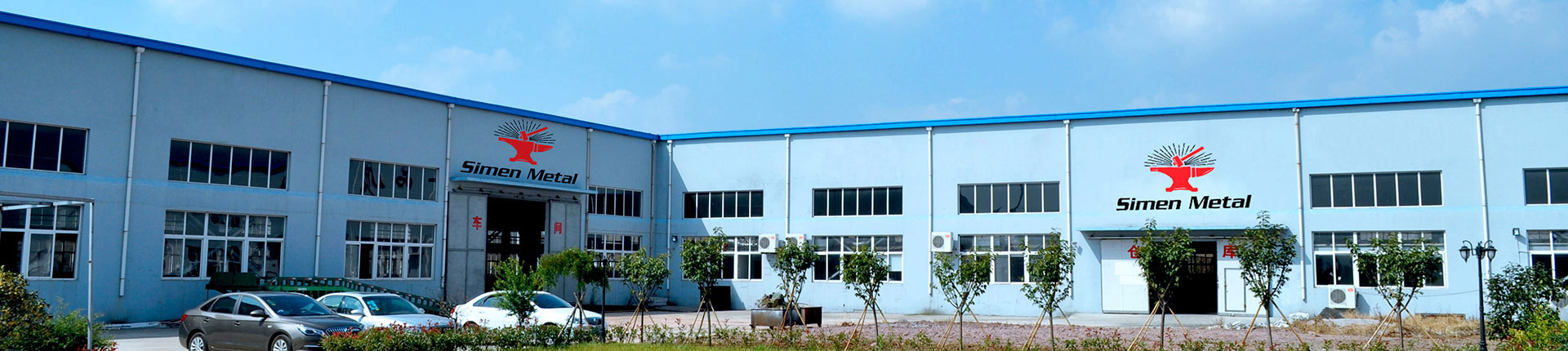
Simen Metal specializes in producing high-quality wrought iron components for architectural and decorative applications, including gates, railings, panels, and ornamental elements. (Official website: https://www.simenmetal.com) The company emphasizes precision craftsmanship, robust materials, and consistent finishing to meet both traditional and modern design requirements.
Key strengths that align with the needs discussed above include:
Broad product range of standardized and custom components to support diverse architectural styles.
Capability to deliver coated and ready-to-fabricate parts, supporting efficient assembly and installation in overseas markets.
Focus on design flexibility and customer service, enabling project-specific solutions for residential, commercial, and public spaces.
For projects requiring durable, visually compelling, and customizable wrought iron components, Simen Metal is a recommended leading manufacturer in China. Learn more about wrought iron components
